How Should a Beginner Start HIIT? A Simple Guide
How should a beginner start HIIT?
Start HIIT with short bursts of challenging movement followed by longer recovery periods. You do not need to sprint all-out or leave every workout exhausted. Choose an exercise you can control, begin with one or two sessions a week, and give your body time to adapt.
Our team recommends using effort rather than speed as your guide: During a work interval, you should breathe hard and find conversation difficult, while still maintaining good form. During recovery, slow down enough to catch your breath before the next round.
What does a beginner HIIT workout look like?
Try this simple 15- to 20-minute session with brisk walking, a stationary bike, or another low-impact activity you enjoy:
- Warm up for 5 minutes. Move at an easy pace, gradually increasing your effort.
- Work for 20 seconds. Pick up the pace to a challenging but controlled intensity.
- Recover for 60 to 90 seconds. Return to an easy pace until your breathing settles.
- Repeat 4 to 6 times. Stop early if you cannot maintain good technique or recover between rounds.
- Cool down for 5 minutes. Slow down gradually and let your breathing return toward normal.
If that feels too demanding, shorten the work intervals or take more recovery time. A brisk uphill walk can provide plenty of challenge without jumping or sprinting.
How can you progress safely?
Leave at least a day between HIIT sessions, and use other days for easy movement or rest. Once the routine feels manageable for a few weeks, add one interval or slightly lengthen the work period. Change one thing at a time rather than increasing speed, duration, and frequency together.
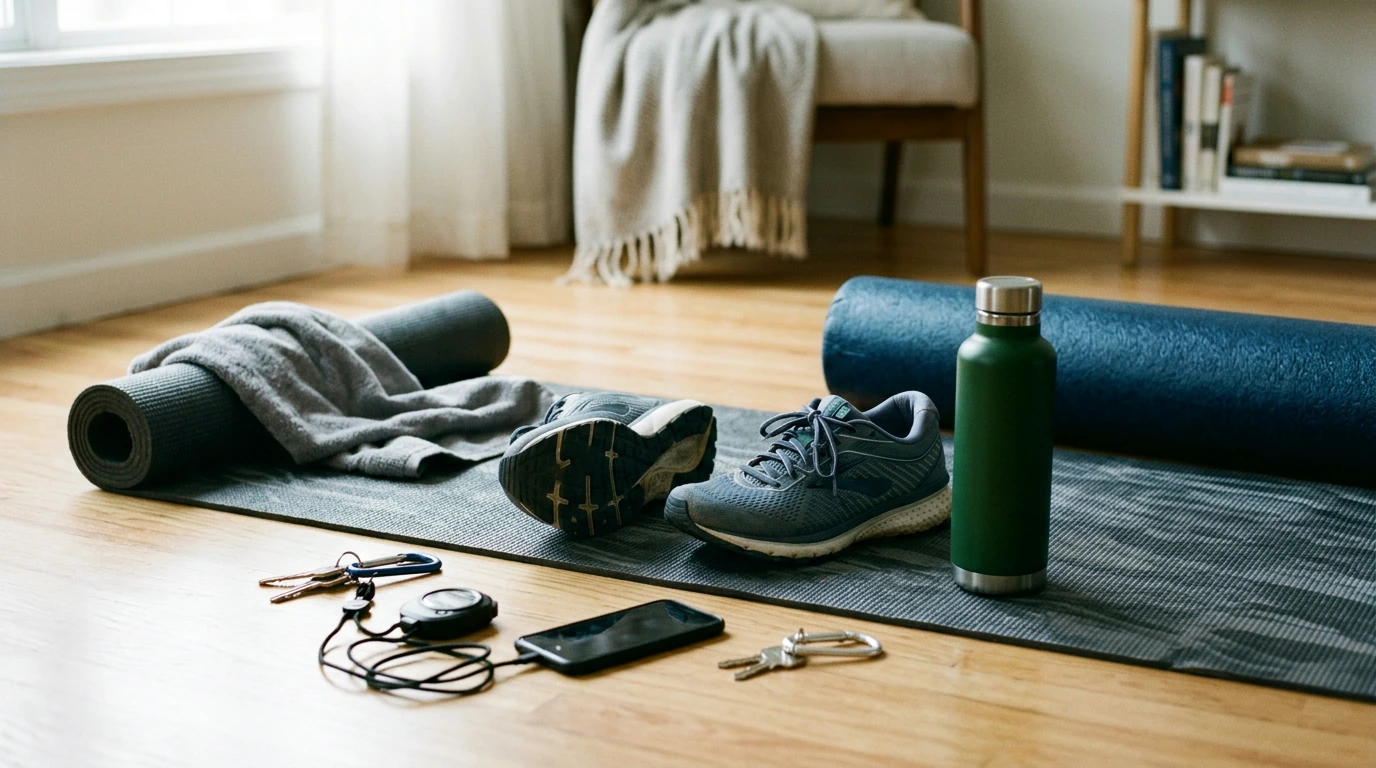
Supportive athletic shoes and comfortable clothing can make movement easier. A stationary bike or timer can be useful, but neither is required. Choose equipment that feels stable and lets you control the pace.
If you have a heart condition, another health concern, or have been inactive for a long time, speak with a healthcare professional before trying vigorous intervals. Stop exercising and seek medical help if you experience chest pain, dizziness, or unusual shortness of breath. Explore our beginner HIIT guide for more guidance.
FAQ
Do you need equipment for HIIT?
No. You can alternate brisk and easy walking without equipment, or use a stationary bike if you prefer. A timer can help you track intervals, but a clock works too.











Leave a comment